Waterproofing for condo and commercial buildings
Where buildings leak, the main waterproofing systems in plain language, the signs a membrane is failing and how to maintain it.
On this page
Leaks in condo and commercial buildings tend to start in the same few places. Knowing where they are, what protects them and how that protection fails makes it easier to plan repairs before water does real damage. This guide covers the main trouble spots, the common waterproofing systems in plain language and what keeps a membrane working.
Where buildings leak
The areas to watch are the horizontal surfaces that collect water, plus the walls below grade.
- Parking decks. Garage slabs with parking or occupied space underneath take water and road salt from cars all winter. Leaks show up on the level below, often with white staining and rust.
- Podium and plaza decks. These are the landscaped areas, walkways and amenity spaces built over a garage or lower floors. The membrane is buried under soil, pavers or concrete, so a leak shows up underneath long before anything looks wrong on top.
- Roofs. Roof leaks usually show up in top-floor units, corridors or mechanical rooms. Drains, flashings and the places where pipes and equipment pass through the roof are common trouble spots.
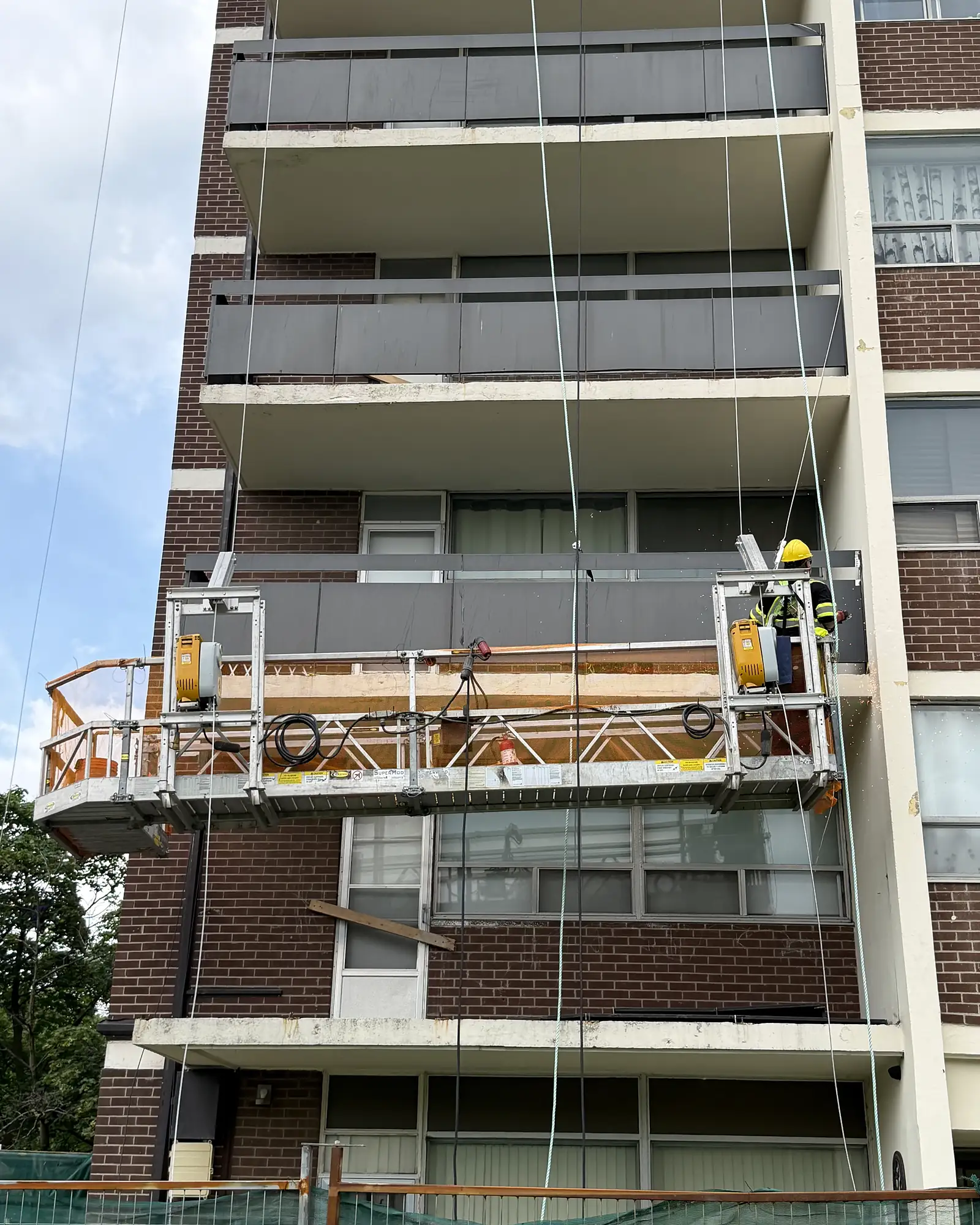
- Balconies. Water gets into balcony slabs through cracks, worn coatings and failed sealants. It corrodes the steel and can reach the balcony below or come in at the balcony door.
- Foundation walls. Below grade, wet soil and groundwater sit against the walls. Leaks show up as damp patches, staining or water coming through cracks on the lowest level.
Traffic membranes for parking levels
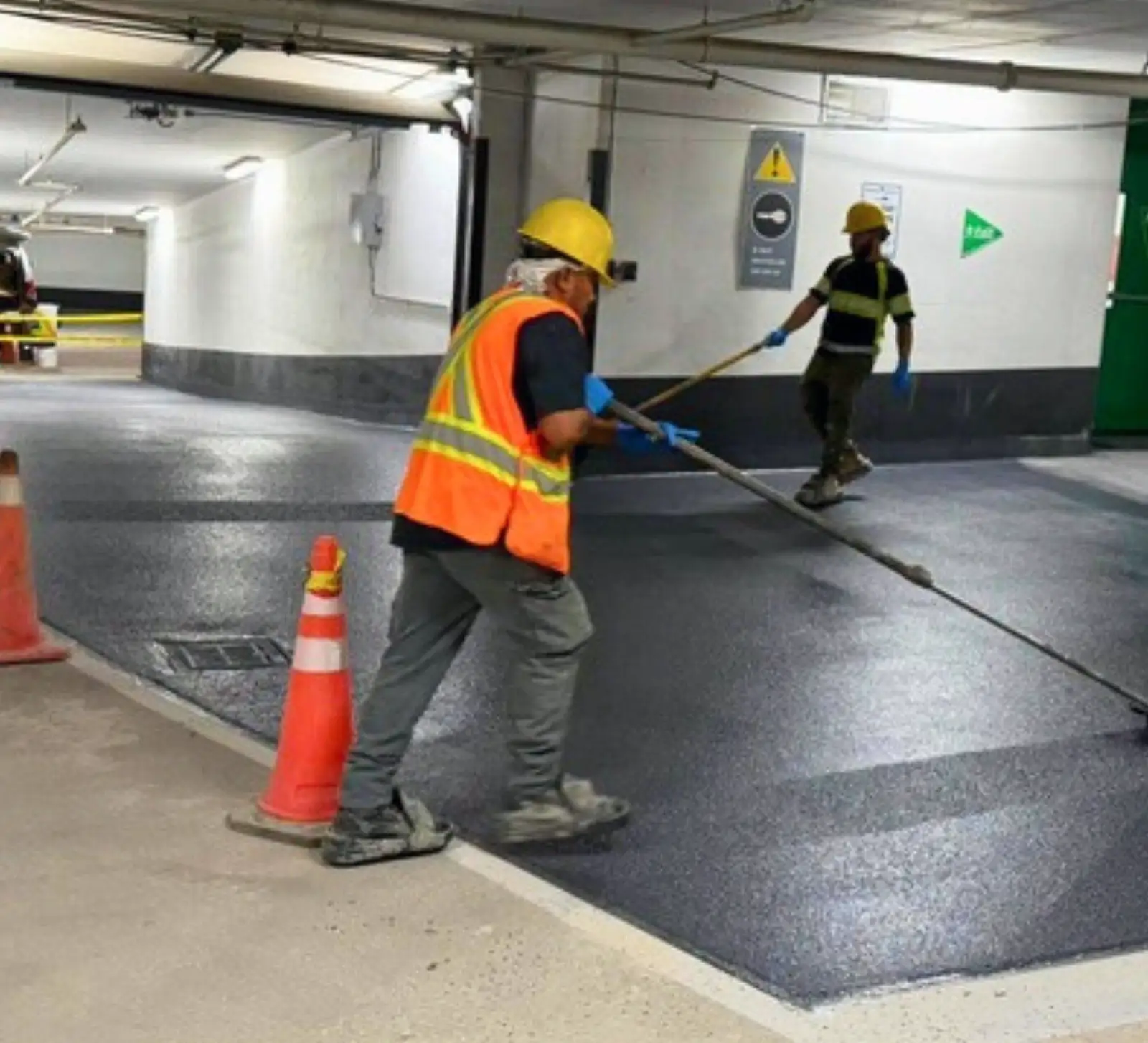
A traffic membrane is a liquid waterproofing system applied directly to the concrete in coats. The base coat does the waterproofing. The top coat holds aggregate, a sand-like grit that gives tires grip and takes the wear.
It is built to be driven on, which is what sets it apart from most other membranes. Ramps, turns and drive aisles see the hardest use and often get extra wearing coats.
The top coat wears with traffic, and it can often be recoated before the waterproofing layer underneath is damaged. That is one reason regular walk-throughs pay off.
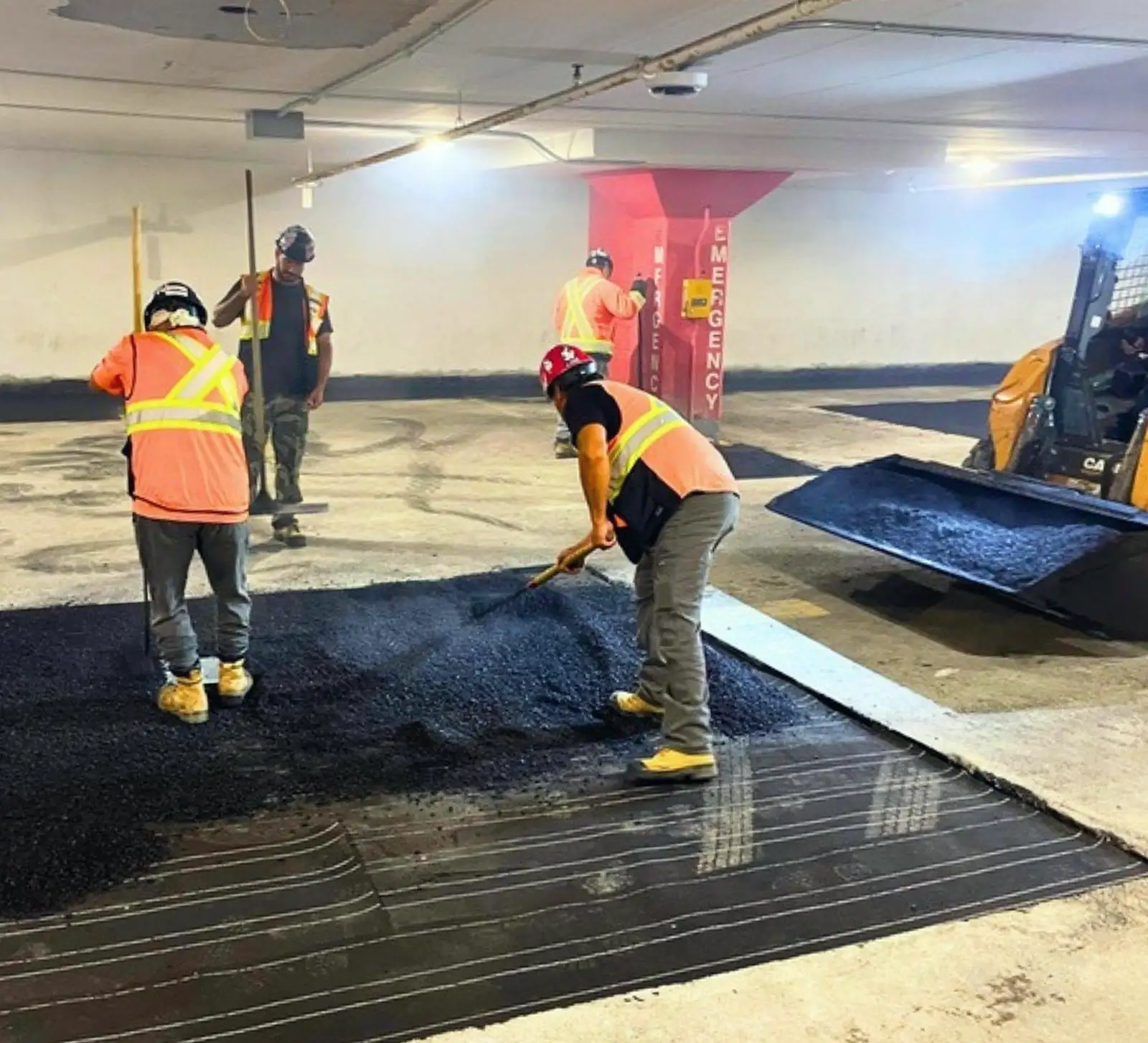
Not every parking deck uses one. Some use a hot-applied membrane under an asphalt wearing surface instead.
Hot-applied rubberized asphalt for roofs and podiums
Hot-applied rubberized asphalt is heated in a kettle on site and spread over the deck while hot. It forms a thick, seamless layer that bonds to the concrete, and it is usually reinforced with a layer of fabric.
It is meant to be covered, not left exposed. On a roof, that usually means insulation and ballast or pavers on top. On a podium or plaza deck, it sits under protection and drainage layers, then soil, landscaping or paving.
Because it is buried, getting back to it means lifting everything on top. That is why the details at drains, walls, curbs and penetrations need to be right the first time. FDS has completed a hot-applied roof restoration, and our roof restoration page covers that service in more detail.
Cold-applied liquid membranes
Cold-applied membranes go on without heat, by roller, squeegee or spray, and cure into a continuous layer with no seams. They suit balconies, smaller decks, curbs and detail areas, and places where a hot kettle is not practical.
Some, like traffic membranes, are built to stay exposed. Others are meant to be covered, like a hot-applied system. The right product depends on whether it will be walked on, driven on or buried, and on the surface it goes over.
They are also useful around penetrations and odd shapes, where sheet membranes are hard to seal.
Below-grade waterproofing
Foundation walls are best waterproofed from the outside, where the water is. That is normally done when the building goes up, or later by digging down to expose the wall.
An exterior system often pairs a membrane on the wall with a drainage layer that carries water down to a drain at the footing.
When digging is not practical, leaks can be treated from inside, for example by injecting cracks with a resin that seals them. That stops water at the crack, but it does not waterproof the whole wall. Which approach makes sense depends on access, where the water is coming from and how the space inside is used.
Signs a membrane is failing
Watch for these:
- Leaks, drips or damp patches on ceilings below a deck, roof or balcony, especially after rain or snowmelt
- White mineral staining or rust stains on the underside of slabs
- Traffic coating worn through to bare concrete, or peeling, blistering or lifting
- Splits in the membrane, often over cracks in the concrete
- Water ponding where it used to drain
- Failed sealant or loose flashing where the membrane meets walls, curbs, drains or doors
- Damp walls, staining or a musty smell in rooms below grade
A leak does not always mean the whole membrane has failed. The problem may be one detail, such as a drain or the edge along a wall, that can be repaired on its own. Finding out takes an investigation, and sometimes cutting a small test opening.
Why surface preparation matters
A membrane is only as good as its bond to the surface underneath. If it goes down over dust, oil, old coatings, loose concrete or a damp slab, it can blister, peel or let water travel underneath it.
Good preparation usually includes:
- Repairing damaged concrete first, so the membrane is not sitting on hollow or cracked material
- Cleaning and roughening the surface, often by shot blasting or grinding, so the membrane can grip
- Treating cracks and joints before the main coats go on
- Checking moisture, temperature and weather against the manufacturer’s requirements
- Careful detailing at drains, curbs, walls and penetrations
None of this shows once the job is finished. That is why it is worth asking any contractor how they will prepare the surface and who checks it before the membrane goes down. On engineered projects, the consultant may also review the surface before coating starts.
Maintenance that helps a membrane last
Routine care helps a membrane do its job for longer:
- Keep drains clear so water does not pond.
- Wash road salt and grit off parking levels after winter.
- Walk garages, roofs and decks regularly and note new stains, leaks or wear.
- Have worn traffic areas recoated before the wear reaches the waterproofing layer.
- Repair failed sealants and loose flashings early.
- Make sure trades know where membranes are, and that nobody drills, anchors or cuts through one without a plan to seal it again.
- Keep a record of leaks and repairs. It helps your engineer and your long-term planning.
Talk to FDS
FDS has been restoring Ontario buildings since 2018. Our waterproofing work includes traffic membranes, hot-applied and cold-applied systems, and below-grade waterproofing. You can see examples on our projects page.
If you have a leak you cannot track down, or a membrane that is showing its age, book a free site visit. We work in four steps: Assess, Plan, Restore, Deliver. The site visit and the written quote are free, with no obligation. Call us at (416) 742-3683, Monday to Friday, 8 a.m. to 5 p.m.
Want us to look at your building?
We visit, take photos and send you a written quote with a clear scope and price. The visit is free, with no obligation.