Parking garage restoration: a guide for property managers
How to tell a parking garage needs work, what restoration involves, how phasing keeps parking open and what to ask a contractor.
On this page
Every winter, cars carry water and road salt into Ontario parking garages, and the damage builds for years before most people notice it. By the time concrete is falling or water is dripping on cars, the problem has usually been growing for a while. This guide covers the warning signs, what a restoration involves and how to plan it so the garage stays in use.
Water and road salt do the damage
Concrete looks solid, but it is porous. Salty water from tires and melting snow soaks into the slab, especially through cracks and worn spots in the membrane.
Inside the concrete is steel reinforcing bar, or rebar. Once enough salt reaches the steel, it starts to corrode. Rust takes up more space than the steel it came from, so it pushes the concrete apart from the inside.
That is how a garage goes from a few stains to cracked, hollow and broken concrete. On ramps and top decks exposed to the weather, freeze-thaw cycles make it worse.
Signs your garage needs work
One sign on its own is worth watching. Several together are a good reason to call in an engineer.
- Leaks and stains. Water dripping through the slab onto cars or the level below, and white crusty stains or small white icicles on the ceiling. These are minerals carried out of the concrete by water.
- Rust stains. Brown or orange streaks on the ceiling, on walls or along cracks. They mean the steel inside is corroding.
- Delamination and spalling. Delamination is a hidden crack running parallel to the surface, usually at the level of the steel. It sounds hollow when tapped. Spalling is the next stage, when that concrete breaks away and often exposes the rebar.
- Cracks. Cracks in slabs, walls and columns, especially ones that leak, stain or keep getting wider.
- Failed joints. Expansion joints with torn, loose or missing seals, or water running through them.
- Worn membrane. Traffic membrane worn down to bare concrete in drive aisles, at turns and on ramps, or coating that is peeling or lifting.
If pieces of concrete are falling from above, treat it as a safety issue. Block off the area and have it reviewed right away.
Start with an engineer’s condition assessment
Larger garage restorations are usually designed by an engineer or building science consultant. The first step is a condition assessment: a close look at the slabs, ramps, walls, columns, joints, drains and membrane.
The engineer may sound the concrete to find delamination, take core samples for testing and map the damage level by level. From that, they prepare drawings and specifications for the repairs. Those documents are what the work is tendered on, so every contractor prices the same scope.
A good assessment also tells you what can wait and what cannot, which is what a board needs to set priorities.
Concrete repairs
The crew removes damaged concrete down to sound material, often with chipping hammers. The exposed rebar is cleaned, and where the steel is badly corroded, the engineer may call for new bars.
The area is then rebuilt with new concrete or repair mortar. Repairs can be on top of the slab, on the underside, or on walls, beams and columns.
Repair quantities are often priced per unit, such as per square metre, because nobody knows the exact amount until the concrete is opened up.
Waterproofing and traffic membrane
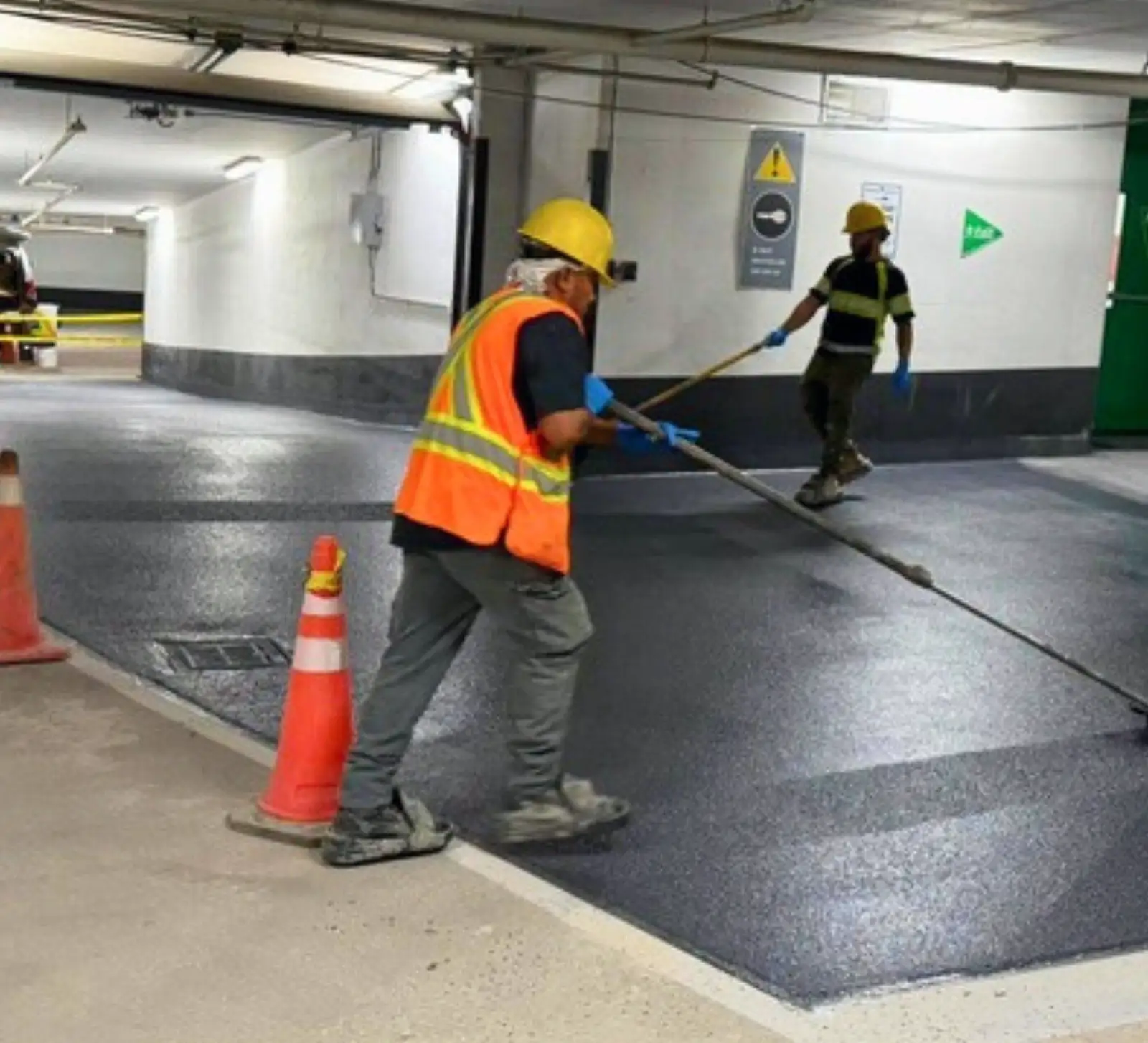
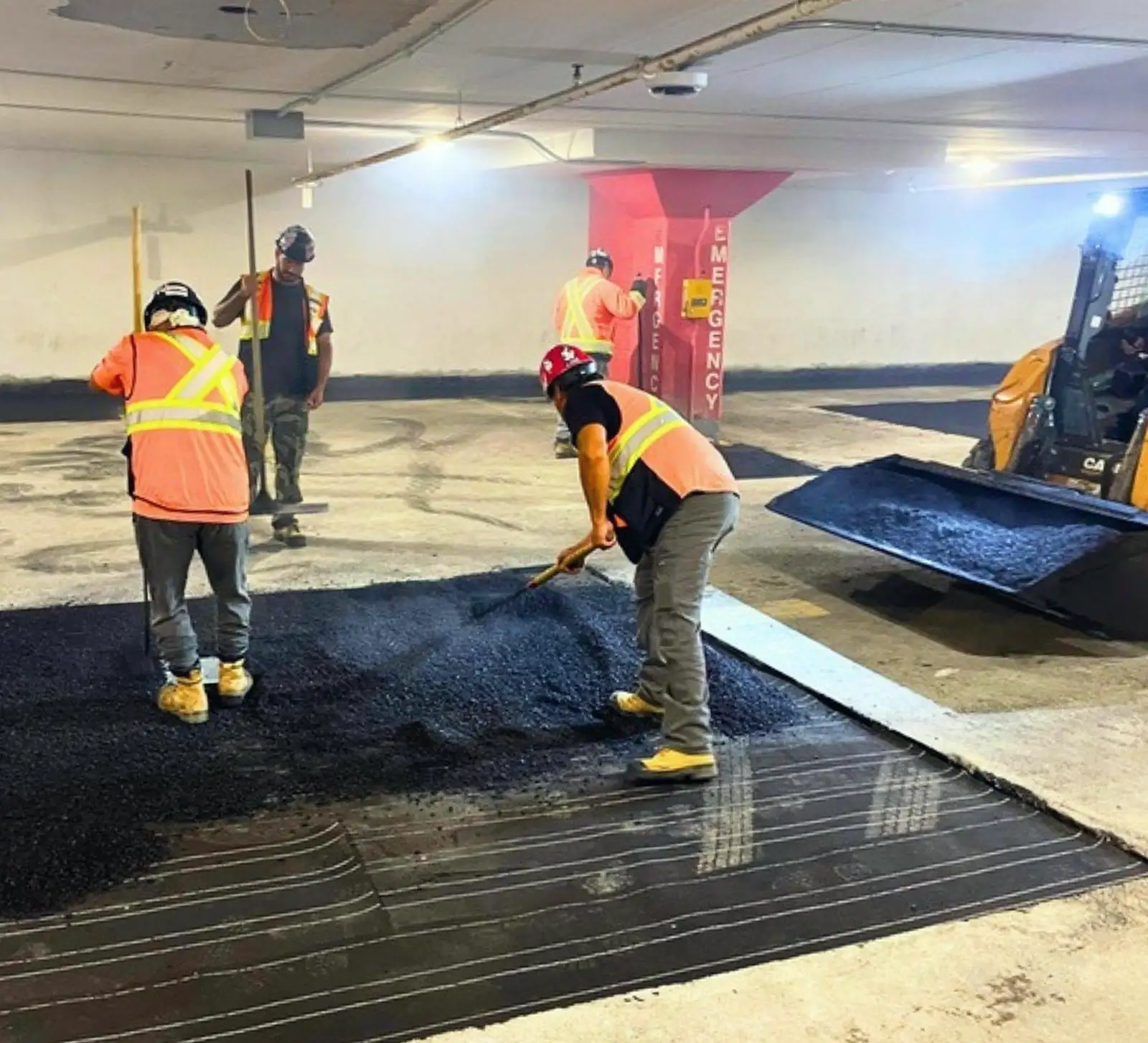
Once the concrete is repaired, the slab needs protection. On parking levels, that is usually a traffic membrane: a liquid-applied waterproofing system built up in coats, with aggregate in the top coat for grip. Some decks use a hot-applied membrane under an asphalt wearing surface instead.
The membrane keeps water and salt out of the concrete, which is the point of the whole project. Without it, the new repairs face the same conditions that damaged the old concrete.
Drive aisles, ramps and turning areas see the most wear, so they often get extra wearing coats. The right system depends on the slab, the traffic and what sits below it.
Expansion joints, drains and line painting
Expansion joints let the structure move as temperatures change. When their seals fail, water and salt run straight through to the level below, so worn joints are often replaced as part of the work. You can read more on our expansion joints page.
Drains are cleaned, repaired or replaced where needed. The slab around them may be reshaped so water reaches the drain instead of sitting on the surface.
If the ramp has heating cables, the restoration is a good time to repair or replace them. FDS has restored a garage ramp with heating cables.
Line painting comes last. Stall lines, numbers, arrows and other markings go back down on the new surface.
Phasing keeps parking available
Closing a whole garage at once is rarely an option. Residents and tenants need somewhere to park, and the building still needs access for deliveries, garbage pickup and emergency vehicles.
The usual approach is phasing. The garage is split into zones, cars are moved out of the active zone, and the rest of the garage stays open with traffic routed around the work.
The plan depends on the layout, the ramps and entrances, and how much parking can be given up at one time. Settle it with the engineer and property manager before work starts, so people get clear notice of when their spot is affected.
At FDS, we phase the work around residents and budget.
Plan it with your reserve fund study
In Ontario, condominium corporations plan major repairs through their reserve fund study. Garage restoration can be one of the larger items in that plan, so it pays to look at it early.
A current condition assessment gives your reserve fund study better information about what work is coming and roughly when. It also helps the board weigh doing the work in one phase or spreading it over several years.
Putting repairs off does not make them go away. Corrosion keeps going, so the amount of damaged concrete tends to grow while you wait. Commercial owners face the same choice in their capital plans.
What to ask a contractor
Whether you hire directly or review tender results with your engineer, ask:
- What parking garage projects have you completed, and can we speak with the property managers?
- How will you phase the work and keep residents informed?
- Who will be on site every day, and who is our main contact?
- What safety program do you run, and is it COR certified?
- How will repair quantities be measured and approved?
- Are you approved by the manufacturer to install the specified membrane?
- What warranty applies, and who stands behind it?
FDS finished a full underground garage waterproofing program in December 2023, with concrete repairs and a new traffic membrane. See more of our work on the projects page.
Talk to FDS
FDS Construction has been restoring Ontario buildings since 2018, with a COR-certified safety program and membership in BCRAO, ACMO and CCI Toronto. Learn more on our parking garage restoration page.
If your garage is showing leaks, rust stains or spalling, book a free site visit. We work in four steps: Assess, Plan, Restore, Deliver. The site visit and the written quote are free, with no obligation. You can also call us at (416) 742-3683, Monday to Friday, 8 a.m. to 5 p.m.
Want us to look at your building?
We visit, take photos and send you a written quote with a clear scope and price. The visit is free, with no obligation.